
A 10 MW data center sounds like one number. It is several. The land and power you need depend on what the 10 MW means and how the campus is laid out.
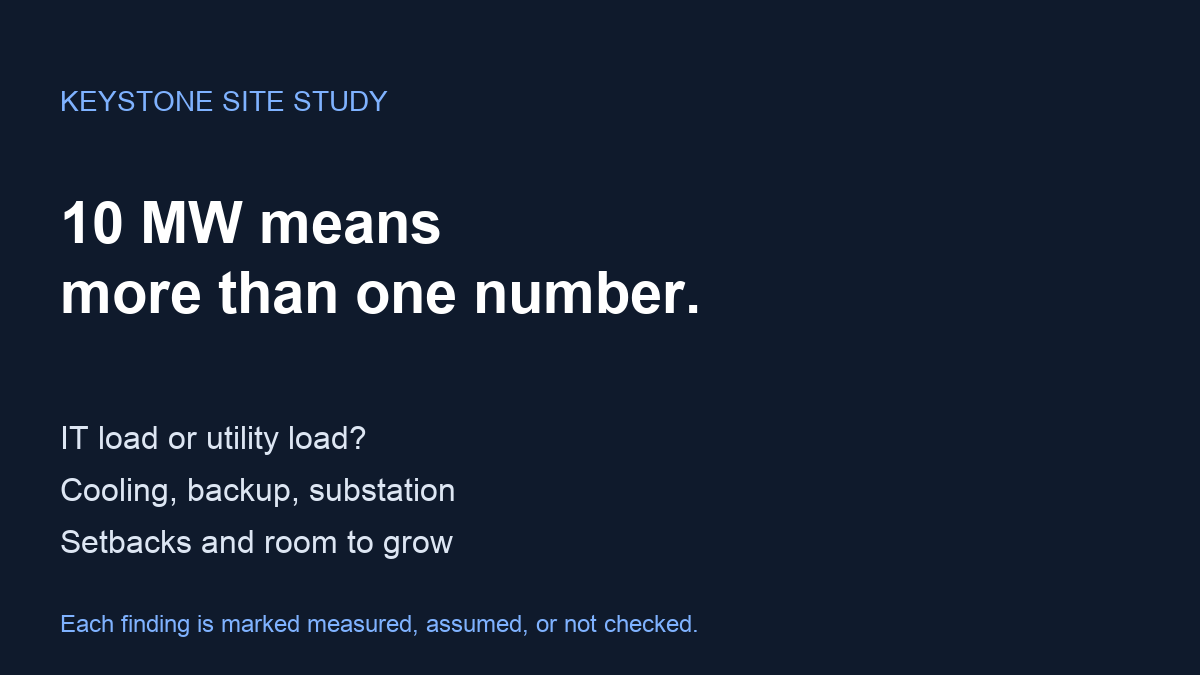
First, what does 10 MW mean?
- IT load. The power the computers use. This is how most operators describe size.
- Utility load. The power drawn from the grid. It is higher than IT load because cooling and losses use power too.
- Phase size. A project may be 10 MW in the first phase and larger later.
Ask which one a figure means, and for which phase. Two sources that say "10 MW" can describe different sites.
What sets the land
- Halls and plant. The buildings for servers, cooling and electrical rooms.
- Backup power. Generators, fuel storage and the space they need around them.
- Substation and lines. Space for utility equipment, and for upgrades the utility asks you to build.
- Setbacks and easements. Land you cannot build on after rules, pipelines, lines and flood areas.
- Room to grow. Land held for later phases.
What sets the power
- The date and phases the utility will deliver, in writing.
- Cooling choice. It changes how much of the utility load goes to cooling.
- Redundancy. More backup means more equipment, space and cost.
What to confirm before you buy
Start with what powered land means, then check the permission route. The full order is in data center site selection: what to check before you buy land. For India, see data centre site selection in India.
What the study gives you
Keystone prepares early data-centre site studies for India and the USA. The study compares campus options for the site, with the land each uses, power needs, cost range, timeline and estimated returns. Each finding is marked measured, assumed or not checked.