
A parcel zoned industrial looks like an easy start for a data centre. It often is not. Many local codes list data centres as a separate use. In some districts they are allowed by right. In others they need a special permit, with its own hearing and conditions. In some they are not allowed.
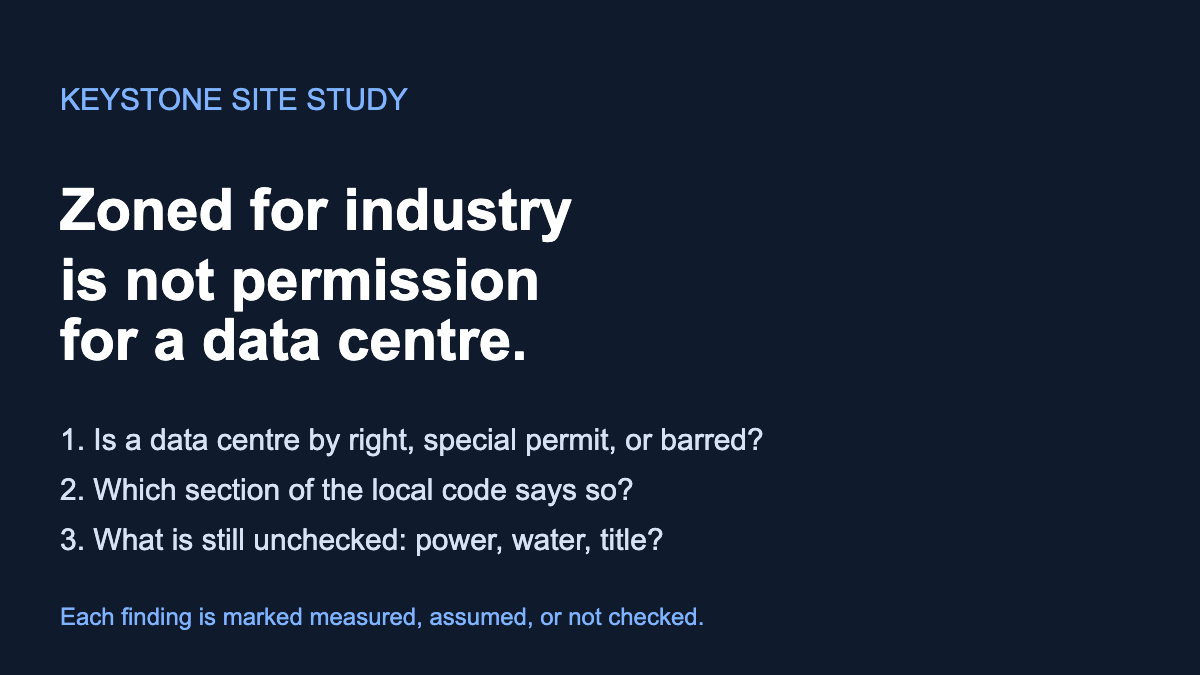
What a Keystone site study checks
- The use route. By right, special permit, or not allowed, for the exact district the parcel sits in.
- The source. The code section and the date it was read, so your team can check it.
- What the permit adds. Setbacks, height, noise, screening or other conditions tied to the use.
- What is not checked yet. Power, water, title, easements and utility letters are listed as open, not assumed.
Why it comes first
Power and land price get the attention. A site that needs a permit you may not get is a timing and cost risk before any of that matters. The study puts the permission route beside the power evidence, campus options, cost range, timeline and returns, so the decision is made with all of it in view.
Each finding is marked measured, assumed or not checked. If you are weighing a site, start with the permission route.
Related: the full order of checks is in data center site selection: what to check before you buy land, and the India version is data centre site selection in India.