
Capacity planning for a new site works best in one direction: from the load you need, to the power it takes, to the land it uses.
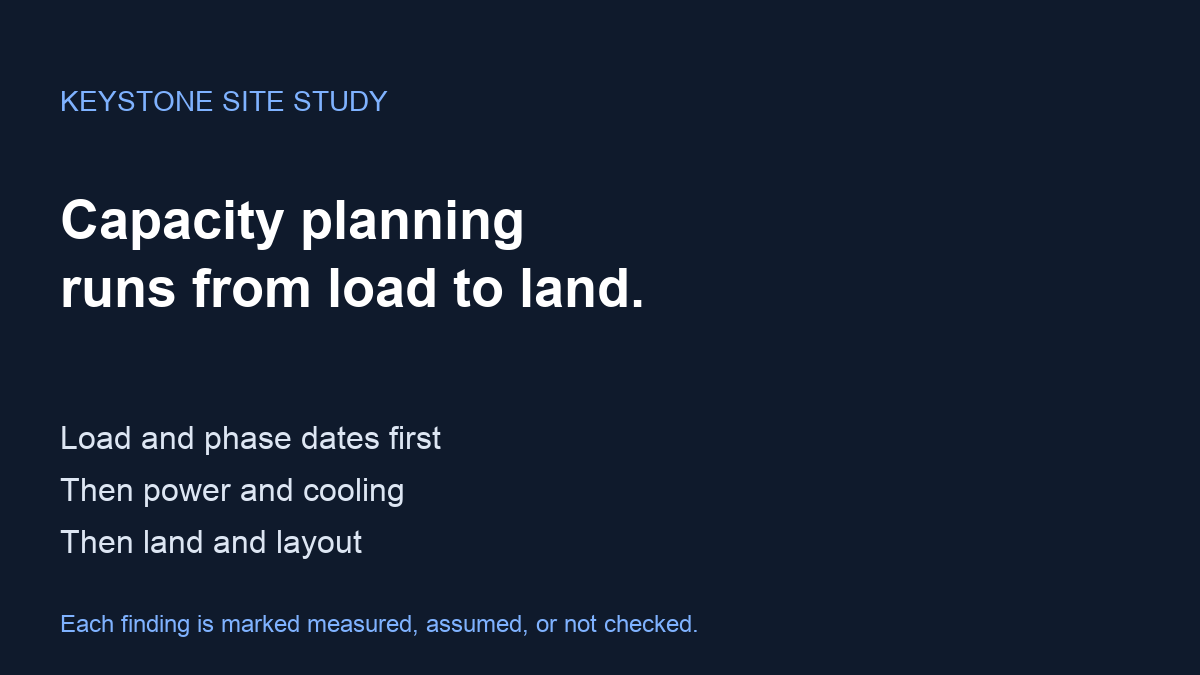
The order
- Load and phases. Write the load for each phase and the date you need it.
- Power. Turn the load into utility power, then check what the utility can deliver and when. See data center power requirements.
- Cooling and water. The cooling choice changes both the utility load and the water you need.
- Land and layout. Test how much land each phase needs, including plant, backup power and the substation, and what is left after setbacks. See what sets the land and power for a 10 MW data center.
- Room to grow. Hold land or options for later phases.
- Cost, timeline and returns. Only after the steps above, because each moves these numbers.
Where plans go wrong
- One date for the whole project instead of a date per phase.
- Power assumed, not confirmed. See what powered land means.
- Land bought before the permission route is known.
What the study gives you
Keystone prepares early data-center site studies for India and the USA. The study compares campus options for the site, with power needs, cost range, timeline and estimated returns. Each finding is marked measured, assumed or not checked.
Read the full guide: data center site selection.