
Keystone delivers India data-centre studies that make cooling and water assumptions visible beside the campus options. The scope connects the proposed cooling approach with site needs, plant space and indicative costs, while recording what still needs evidence.
What does the cooling comparison include?
The comparison starts with the intended IT load and the proposed cooling approach. The brief defines which parts of the system are included before the study compares the resulting campus options.
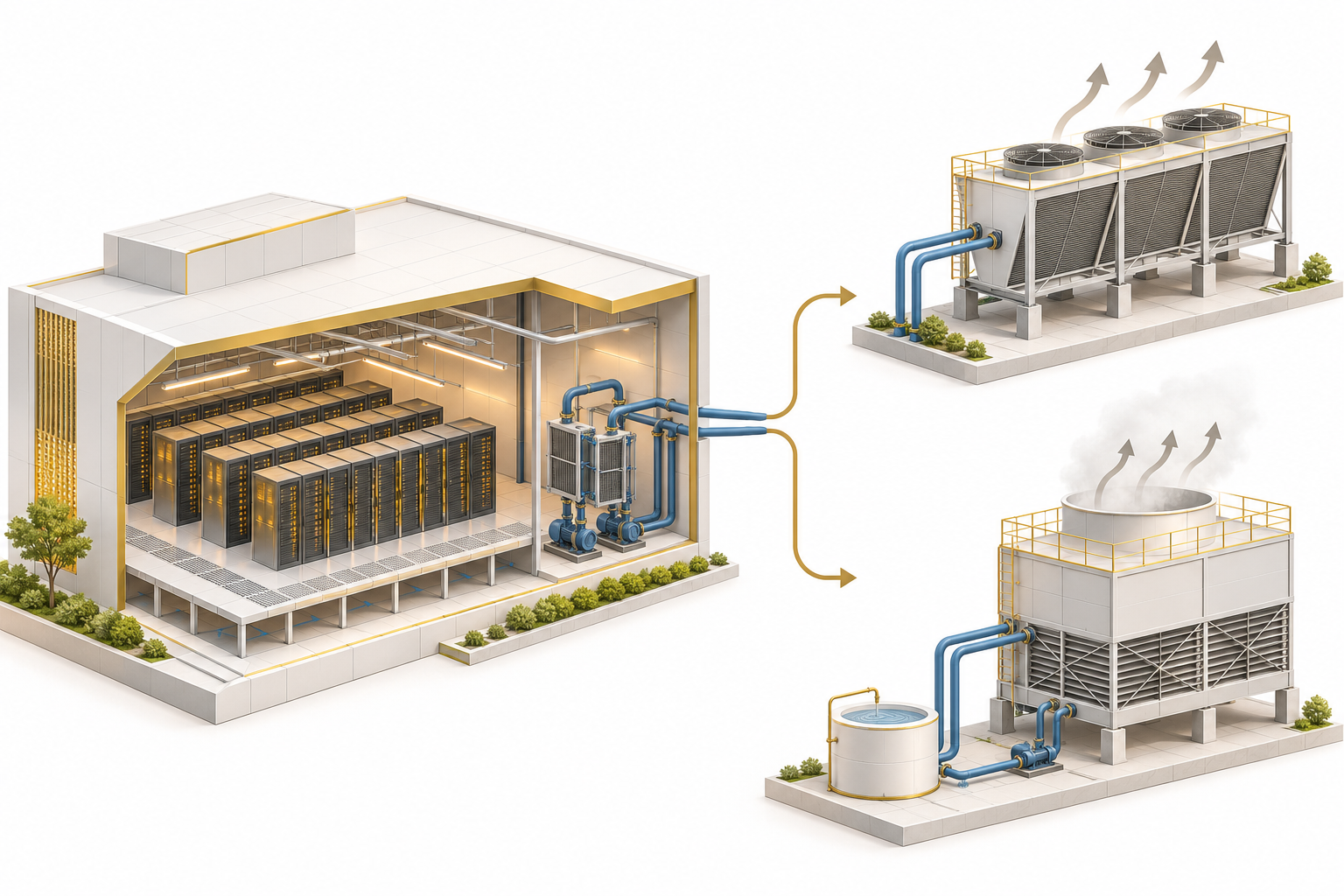
Terms such as liquid cooling describe only part of the arrangement. The study needs enough detail to explain how heat is collected, moved and rejected, and what assumptions have been used for the site. Where the design is still open, the alternatives remain explicit.
Why keep the heat-rejection method visible?
The heat-rejection method helps explain the water assumption. A cooling description is incomplete when it stops at the rack or the hall.
The US Department of Energy cooling guide describes an evaporative arrangement in which heat passes through chilled-water and condenser-water loops before reaching a cooling tower. This is a technical example of one arrangement. It supplies no water entitlement, local design approval or India site demand figure.
Within a Keystone study, the agreed cooling assumptions provide context for the campus comparison. They are read alongside plant-space needs and the available water evidence.
What water evidence should the brief record?
The brief records the source of each water assumption and the question it answers. A supplier statement, a proposed connection and a model input have different evidence status.
- The proposed water source and the document supporting it.
- The uses covered by the demand estimate.
- The time basis of the quantity, such as annual use or peak demand.
- Treatment, storage or other site provisions included in the agreed scope.
- Unconfirmed availability, quality or operating restrictions.
This record keeps a general cooling choice from becoming an unsupported claim about the site. India supply and permission questions remain tied to the relevant site documents and authorities.
How does this connect to cost and land?
Cooling assumptions belong beside the land and cost comparison. The study shows the campus option and the basis of its indicative estimate together.
Your team can then see which option assumes a particular plant arrangement, water source or reserve area. For the related capacity question, see the India power-and-land study. For estimate boundaries, see why cost-per-MW figures differ.
What should you send to Keystone?
Send the site boundary, intended capacity, cooling brief and any available water or utility documents. Identify the choices still open for comparison.
Keystone uses that brief to define the study and its evidence gaps. Review the data-centre study scope to see how the cooling inputs connect with campus options, indicative cost, timeline, feasibility and returns.