
Keystone delivers India data-centre site studies that connect the land decision with power needs, campus options, cost, timeline and returns. The comparison shows what each option assumes and which source gaps could change the result.
What decision does the study help you make?
The study helps your team compare which site and campus option to take forward. It brings land, capacity and commercial assumptions into the same early review.
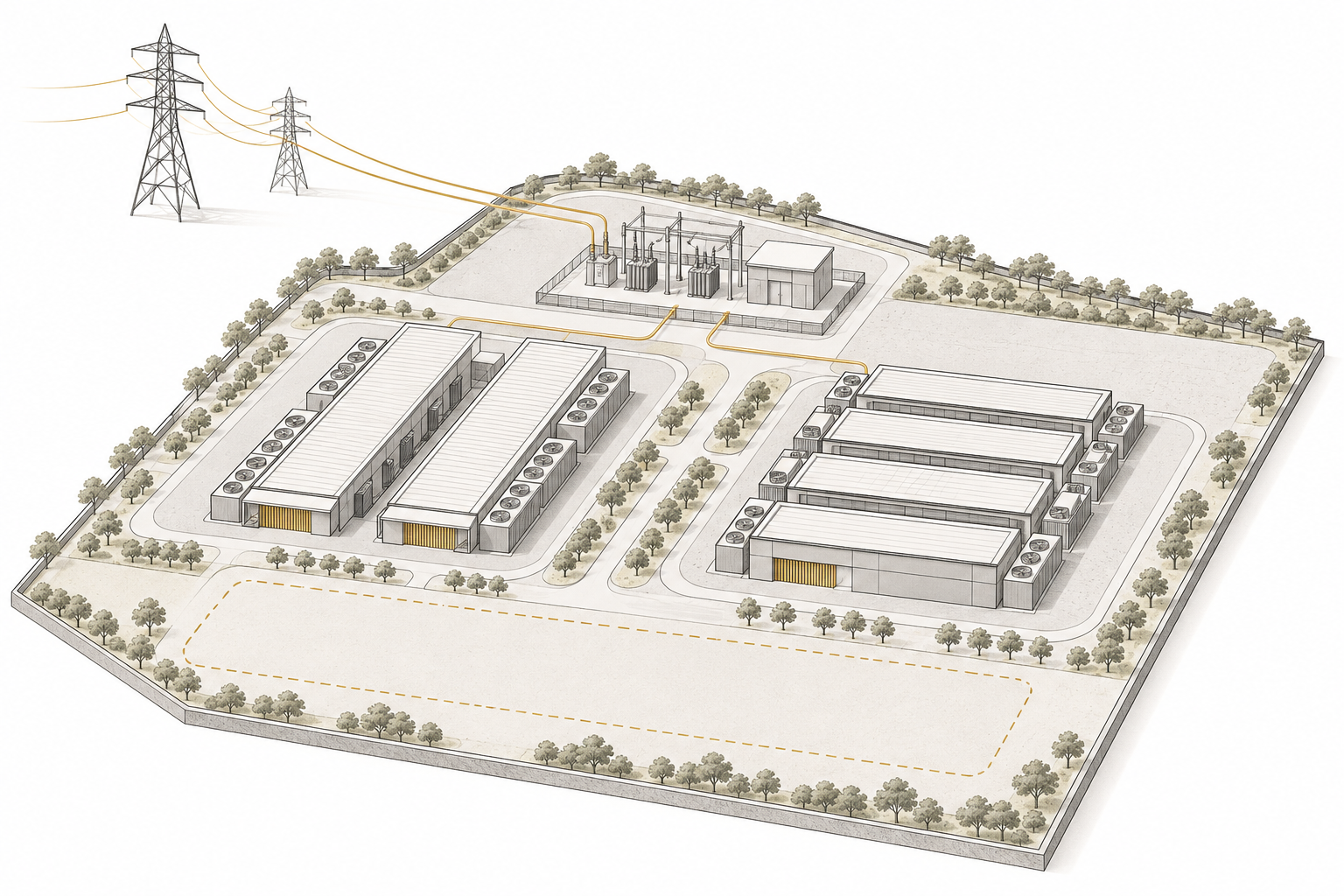
A larger parcel is one input. The study also considers how the proposed halls, utility areas, access and room to expand relate to the development brief. It presents the resulting options alongside indicative costs, timing and returns, so the land comparison has a stated basis.
How does the study describe power needs?
The brief separates the intended IT load from the wider facility demand and the evidence for an electrical connection. Each label answers a different question.
The US Department of Energy defines power usage effectiveness, or PUE, using total annual facility energy divided by annual IT equipment energy. That energy ratio helps explain the boundary between IT and facility consumption. It does not establish a site's available connection capacity. See the Department of Energy definition.
For an India study, the proposed IT load and power assumptions sit next to the utility records available for that particular site. A map location or a nearby substation does not become a confirmed allocation.
What belongs beside each campus option?
Each option needs enough context to explain what is being compared. The study presents the proposed campus arrangement with its capacity basis and commercial assumptions.
- Site boundary and the development brief used for the comparison.
- Hall arrangement, utility space and access assumptions.
- Land reserved for possible expansion.
- Power demand assumptions and the status of supporting evidence.
- Indicative cost, timeline, feasibility and returns on the stated basis.
These fields help your team see whether a preferred option depends on an unresolved input. They also make the next information request more specific.
What changes when power evidence changes?
New utility evidence can change the comparison. A revised connection assumption needs to be read alongside the campus option and its timing assumptions.
The useful handoff is the study together with its brief and evidence status. Your team can then identify which assumption requires confirmation before taking the option further. For timing context, read how grid-power evidence affects an early study.
How do we start the study?
Send the boundary, location, intended capacity and available site documents. Keystone frames the early comparison around the agreed scope and identifies missing inputs.
Read what the data-centre study covers, or continue with the India water-and-cooling study brief. The next step is a scoped site study, with its assumptions visible from the start.