
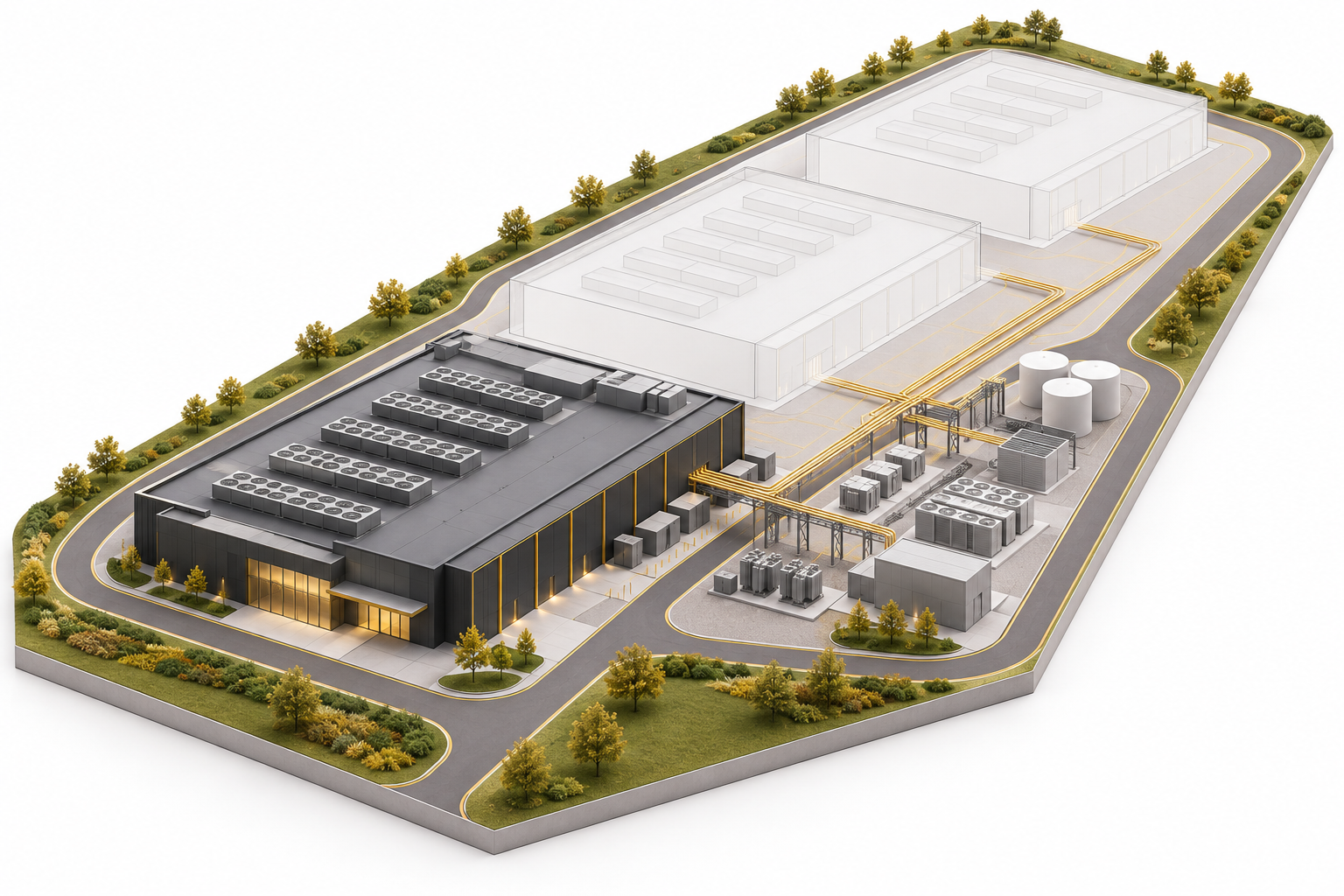
Keystone delivers USA data-center site studies that compare campus options with their cost, timeline, feasibility and returns. For a phased brief, the comparison makes the first-phase scope and the intended later campus visible together.
What question does a phased study answer?
The study helps your team compare what to take forward first and what space or assumptions to preserve for later. The agreed brief defines the capacity and commercial basis of the alternatives.
A first-phase option and a full-campus option need clear boundaries. Each comparison states which halls and supporting works it includes. This gives your team a way to read the proposed campus arrangement alongside its indicative cost and timing.
How are shared works treated in the brief?
Shared works need a stated allocation and timing assumption. The study brief identifies which items belong to the initial option and which support later expansion.
The comparison can then be scoped around the questions your team needs answered:
- Which halls are included in the first option?
- What utility areas and access arrangements does that option assume?
- Which common works are included in its estimate?
- What land remains available for later halls or plant?
- What timing and commercial assumptions support the return comparison?
These are study inputs and comparison questions. The agreed scope determines how far each one is developed.
How are power and capacity described?
The study states the capacity basis and separates it from evidence for a power connection. IT demand, facility consumption and a utility commitment are distinct inputs.
ENERGY STAR describes a data center's electrical distribution system as including switchgear, transformers, UPS systems and distribution equipment. This explains why the supporting electrical scope needs to be visible beside the hall capacity. It does not provide a connection date for a proposed campus.
For the early study, utility documents are recorded with their status. A requested date remains a requested date until supporting evidence changes it.
What makes the financial comparison readable?
The comparison needs the cost scope, timing basis and return assumptions beside the option. A result is easier to assess when the reader can see what has been included.
The brief records which assumptions the team wants tested. These may include the development sequence, intended capacity and timing of later works. The study's commercial outputs are read on that stated basis. See what an underwriting report should disclose.
What is the handoff to the next team?
The handoff is an early campus comparison with its source status and unresolved inputs. Your team can use it to decide which option merits further work and which information to request next.
Send the boundary, capacity brief, priorities and available records. Keystone's data-center study connects site strengths and risks with campus options, indicative cost, timeline, feasibility and returns. The USA flood-screening brief covers another part of the same site decision.