
Keystone prepares early data-centre site studies for India and the USA. Each comparison brings campus options together with site risks, power assumptions, indicative cost, timing and returns.
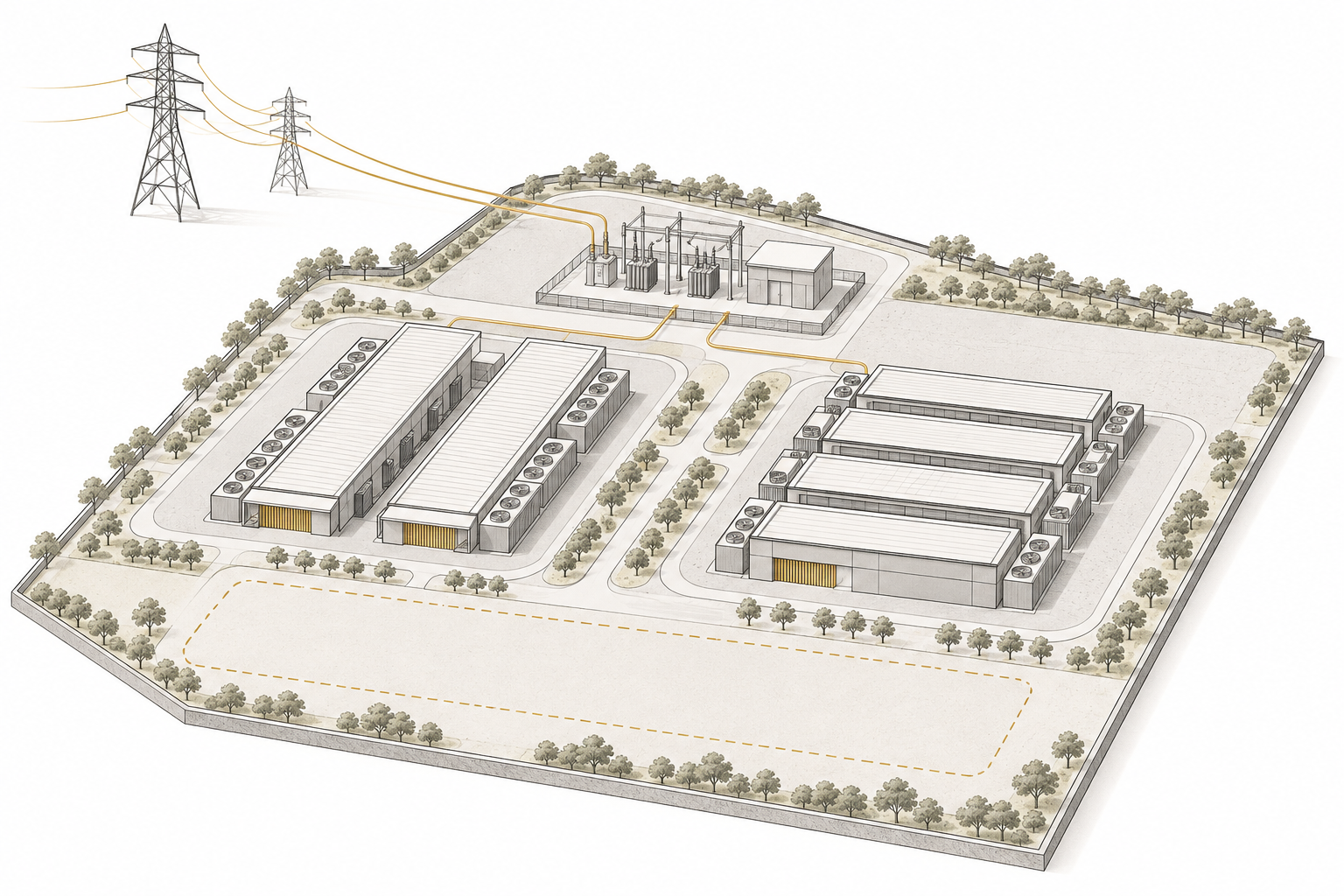
The study starts with the site boundary and a brief. It records the source status of material inputs and identifies further checks. A nearby power line does not establish an allocated connection.
The report helps your team frame the next review. It does not establish title, permission, utility capacity or construction design approval. Bring a boundary and available site documents to discuss the scope.
Eight study questions before a land commitment
These are study scenarios, not historical cases or client outcomes.
- Load and boundary. The intended IT load and the facility demand use different boundaries. The study states both before comparing campus options.
- A nearby substation. A substation is nearby but there is no written allocation. The study records the missing utility evidence.
- Connection timing. A possible connection date is a regional assumption. The study labels it and shows which timing comparison depends on it.
- Usable area. The land fits halls, but access and utility space reduce the usable area. The study compares the campus arrangement against its boundary.
- Expansion. Expansion is part of the brief. The study shows the reserved space and the assumptions behind it.
- Water. Water evidence is incomplete. The study identifies the missing check beside the cooling assumption.
- Land use. Land-use information is incomplete. The study keeps that uncertainty and does not describe permission as established.
- Returns. Returns depend on occupancy, price and cost assumptions. The study states the basis used for each comparison.
Where to go next
Agree the site, the brief and the evidence to use. Keystone prepares an early study; further utility, legal and engineering checks remain site-specific. Read about the data-centre study and the India power and land study.