
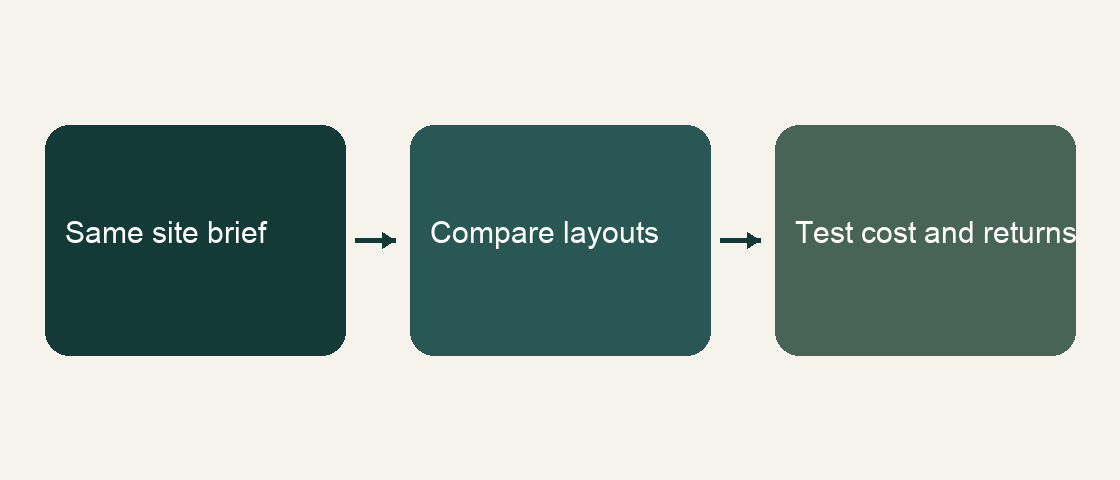
Use the same site boundary, market assumptions and area definitions. Record each design difference and track how it affects cost, schedule and estimated returns.
Compare the same brief
Agree on the boundary, target buyer and area definitions before comparing layouts. Use the same assumptions for construction rates, sale prices and financing in the first comparison. That makes the effect of changing the design easier to see.
Follow the area into the financial model
For each option, list the area that counts against the planning limit, the total built area and the area assumed to generate revenue. Keep parking, circulation and shared space visible. A larger building can cost more to construct even when it adds little revenue-generating area.
Then compare unit counts and sizes, construction sequence, cash needed before receipts and the estimated return. Test the same slower-sales and higher-cost cases on both options. If the preferred option changes, flag the assumption that caused it.
What the study includes
A Keystone development study brings layouts, unit mix, cost, timing and estimated returns together. Share the site boundary and the decision your team needs to make.